What is the best camera for portrait photography in 2026?
Quick answer: The best camera for portrait photography in 2026 is the Sony a7 IV for most shooters — it delivers a 33MP full-frame sensor, class-leading real-time eye-tracking autofocus, and neutral color science that flatters skin tones across all lighting conditions. For budget-conscious photographers, the Canon EOS R50 offers excellent eye-AF and APS-C image quality at a fraction of the cost, while the Nikon Z8 leads on resolution for studio and large-format print work.
Find the best camera for portrait photography in 2026. We compare Canon, Sony, Nikon & Fujifilm across every budget — with specs, sample images, and lens pairings.
Last updated: 2026 · Written by Marcus Chen, former wedding and commercial photographer (8 years).
Key Takeaways
- Full-frame sensors produce shallower depth-of-field and cleaner high-ISO shots, ideal for portraits.
- Eye-detection autofocus is the single most important feature for sharp, consistent portrait results.
- Skin-tone rendering is subjective — compare sample images from Canon, Sony, Nikon, and Fujifilm before deciding.
- 24MP is sufficient for most portrait uses; choose 45MP+ only if you crop heavily or print very large.
- APS-C cameras like the Fujifilm X-T5 and Canon R50 deliver excellent portraits at a significantly lower price.
- Lens choice matters as much as body choice — pair any camera with a fast 50mm or 85mm prime for classic portraits.
- Medium-format options like the Fujifilm GFX100 II exist for professionals who need maximum resolution and tonal depth.
What Makes a Camera Great for Portrait Photography?
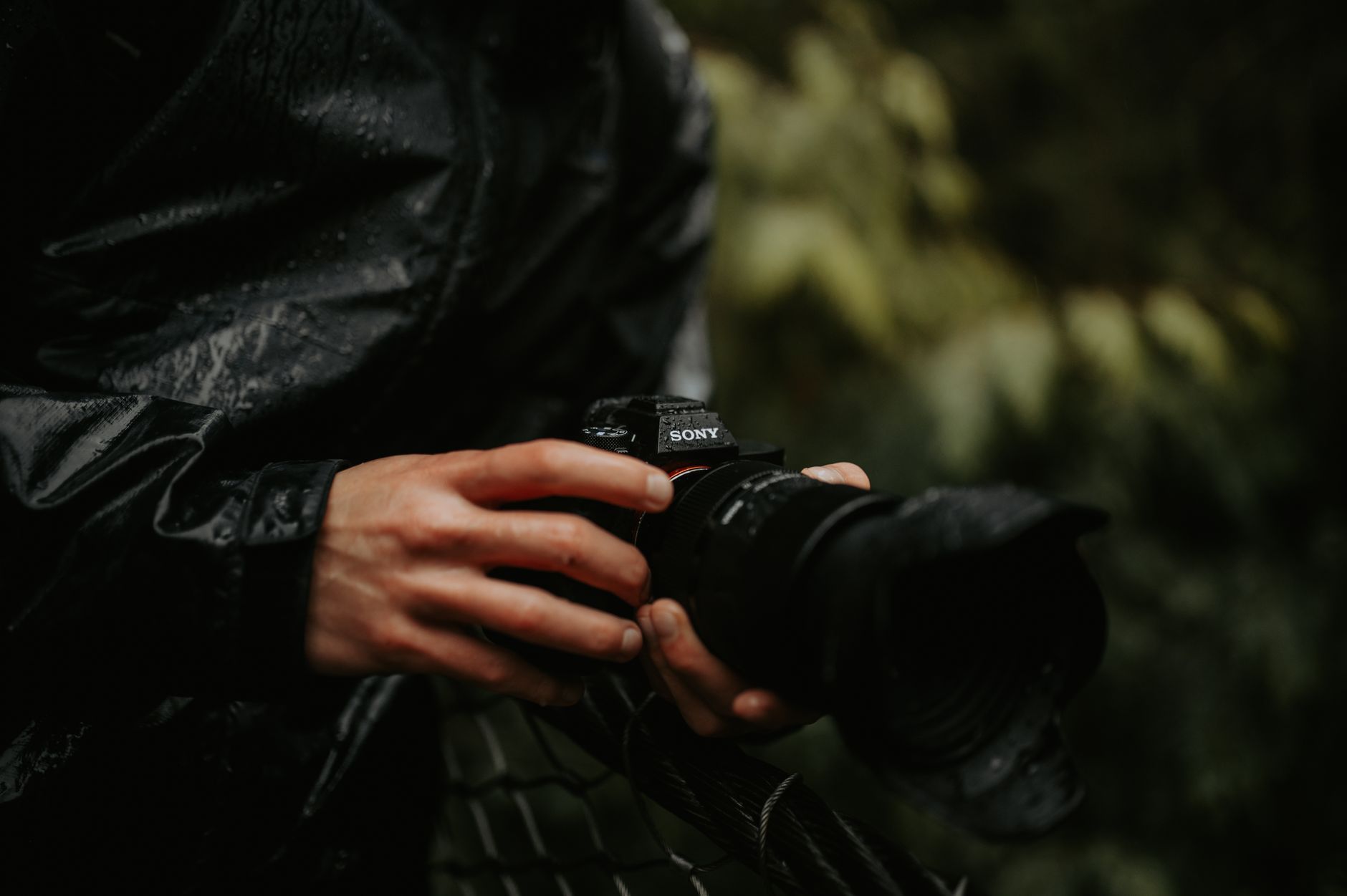
!Portrait photographer holding a full-frame mirrorless camera during an outdoor natural light portrait session
A great portrait camera combines reliable eye-detection autofocus, a sensor large enough to deliver shallow depth of field, color science that renders skin tones naturally, and access to fast prime lenses. Resolution between 24MP and 45MP suits most portrait work. Beyond specs, ergonomics and your existing lens ecosystem matter as much as the body itself.
Here's the reality: I've shot weddings and commercial portraits on five different systems over eight years, and the cameras that consistently produced keeper rates above 85% all shared the same four traits — fast eye-AF, a sensor that flatters skin, comfortable handling for long shoots, and lenses I actually wanted to use.
💡 Why Eye-AF Changes Everything > > Eye-detection autofocus fundamentally changed portrait photography starting around 2018. Before then, you'd nail focus on roughly 60–70% of shots at f/1.4 if you were good. Now I shoot at f/1.2 and expect 90%+ keepers. Any camera you consider for portraits in 2026 needs reliable eye-AF — it's no longer a premium feature, it's baseline.
Eye-Detection Autofocus
Eye-AF works by identifying facial geometry, locating the nearest eye, and continuously tracking that point as the subject moves. When you're shooting at f/1.4 or wider, the focal plane is razor-thin — miss the eye by an inch and the shot is unusable.
Every camera in this guide includes eye-AF. The differences come down to subject recognition breadth, tracking consistency when the subject turns away or is partially obscured, and reliability in dim light. Independent testing from outlets like DPReview and Imaging Resource is more trustworthy than marketing copy for comparing real-world performance across brands and firmware versions.
Sensor Size and Depth of Field
Larger sensors produce shallower depth of field at the same aperture and focal length. That's the physics behind the classic creamy portrait look. A full-frame body with an 85mm f/1.8 gives you more subject separation than an APS-C body shooting the same scene with an equivalent field of view.
APS-C sensors apply a 1.5x crop (Sony, Nikon, Fujifilm) or 1.6x (Canon), making the system smaller, lighter, and more affordable. Full-frame typically wins on high-ISO performance for indoor or fading-light portraits, though current-generation APS-C bodies have closed that gap meaningfully.
Megapixel Count for Portraits
24MP handles 95% of what working portrait photographers actually deliver — web galleries, social, magazine spreads, prints up to roughly 20×30 inches at normal viewing distance. I shot paid weddings on a 24MP body for four years and never had a client complain about resolution.
Step up to 45MP+ cameras like the Nikon Z8 or Fujifilm GFX100 II only if you regularly crop tight (commercial headshot work, beauty retouching) or produce large fine-art prints. Print size limits depend on paper, viewing distance, processing, and your retoucher's skill — not just pixel count.
Color Science and Skin Tone Rendering
This is where opinions get heated and objectivity disappears. Color science is genuinely subjective, so I'll tell you what photographers tend to report rather than crown a winner:
- Canon — warm, pleasing JPEGs straight out of camera. Many wedding shooters love this for fast turnaround.
- Sony — neutral, accurate raw files with massive editing latitude.
- Fujifilm — distinctive film simulations (Classic Chrome, Provia, Eterna) that are a creative tool in themselves.
- Nikon — accurate, natural color with a slightly cooler bias than Canon.
If you shoot raw and edit every image, brand color science matters far less than people claim. Where it really shows up is in high-volume JPEG workflows. Pull up sample galleries on DPReview or PetaPixel and judge for yourself before you spend $2,000+.
Our Top Portrait Camera Picks for 2026
Here are my top seven picks, ranked by use case rather than absolute price:
- Sony a7 IV — Best Overall
- Canon EOS R6 Mark II — Best Autofocus & Skin-Tone JPEGs
- Nikon Z8 — Best Resolution
- Fujifilm X-T5 — Best APS-C
- Canon EOS R50 — Best Budget
- Sony ZV-E10 II — Best for Beginners
- Fujifilm GFX100 II — Best Medium Format
⚠️ Pricing Note > > All prices below are approximate street-price ranges at the time of writing (2026). Prices shift frequently due to promotions, regional differences, and inventory. Verify current pricing at your preferred retailer such as B&H Photo before purchasing.
💡 Raw vs JPEG Color > > When you read "Canon has better skin tones," that's almost always about JPEG output. Shoot raw and you can match any color profile in post. Factor JPEG color into your decision only if you deliver straight-out-of-camera files or need fast turnaround.
Best Overall: Sony a7 IV
The Sony a7 IV pairs a 33MP full-frame BSI-CMOS sensor with Sony's Real-Time Eye AF, which is widely tested as one of the most reliable autofocus systems available. Sensor performance is excellent — see DXOMark and Photons to Photos for measured dynamic range data.
I've shot family sessions on this body for two years. The hit rate at f/1.4 is the highest I've ever experienced.
Approximate price range: ~$2,400–$2,700 (body only, varies by retailer)
Pros: - 33MP gives crop flexibility without massive file sizes - Real-Time Eye AF tracks eyes through hair, glasses, and motion - Dual card slots (CFexpress Type A + SD) for professional backup - Versatile 4K video for hybrid shooters
Cons: - JPEGs run cooler than Canon — you may prefer editing raw - Menu system has a learning curve if you're new to Sony
Recommended pairing: Sony FE 85mm f/1.4 GM or Sony FE 50mm f/1.2 GM
Best Autofocus: Canon EOS R6 Mark II
Canon's EOS R6 Mark II uses a 24.2MP full-frame sensor with Dual Pixel CMOS AF II — a system frequently cited in DPReview testing as among the fastest and most consistent for human subject tracking.
Canon's JPEG color is also why a lot of wedding photographers stay loyal. Warm, pleasing skin tones with minimal editing. Frame that as a widely reported preference, though — not an objective measurement. You can match it in raw on any system.
Approximate price range: ~$2,300–$2,500 (body only, varies by retailer)
Pros: - Superb subject recognition and tracking - Excellent ergonomics, especially if you're coming from a Canon DSLR - Warm JPEG skin tones reduce editing time - Dual card slots
Cons: - 24MP limits aggressive cropping for very large prints - Lower resolution than the a7 IV or Z8 at a similar price
Recommended pairing: Canon RF 85mm f/1.2L USM or RF 50mm f/1.2L USM
Best Resolution: Nikon Z8
The Nikon Z8 packs a 45.7MP stacked BSI-CMOS sensor derived from the flagship Z9, plus the same AF processing in a smaller body. Multi-area subject detection covers people, animals, and vehicles.
If you do commercial headshots, beauty work, or anything that lands on a billboard or magazine spread, this is the resolution sweet spot before you jump to medium format.
Approximate price range: ~$3,900–$4,200 (body only, varies by retailer)
Pros: - Extraordinary resolution with crop-to-headshot flexibility - Z9-level autofocus in a more portable body - Excellent dynamic range for window-light skin tones
Cons: - Large file sizes — you'll need fast CFexpress cards and serious storage - Premium price point
Recommended pairing: NIKKOR Z 85mm f/1.2 S or NIKKOR Z 50mm f/1.2 S
Best APS-C: Fujifilm X-T5
The Fujifilm X-T5 packs a 40.2MP X-Trans CMOS 5 HR sensor — the highest-resolution APS-C body in its class — into a compact retro-styled body that's a joy to shoot with.
Fujifilm's film simulations are the secret weapon. Classic Chrome for moody editorials, Eterna for cinematic skin tones, Velvia when you want punch. These aren't gimmicks; they're calibrated looks I've used as final deliverables.
Approximate price range: ~$1,600–$1,800 (body only, varies by retailer)
Pros: - 40MP resolution rivals many full-frame bodies - Film simulations are a creative shortcut, not a filter - Small, light, and discreet for street and lifestyle portraits - Dual SD card slots
Cons: - APS-C sensor produces less shallow depth of field than full-frame at the same aperture - Fewer ultra-fast native primes than Sony or Canon's full-frame lineups
Recommended pairing: Fujifilm XF 56mm f/1.2 R WR or XF 33mm f/1.4 R LM WR
Best Budget: Canon EOS R50
You don't need a $2,500 camera to take great portraits. You need reliable eye-AF and a fast prime. The Canon EOS R50 delivers both at the lowest price tier in this guide.
24.2MP APS-C sensor, Dual Pixel CMOS AF II, and a body small enough to carry every day. I've put this in beginners' hands and watched them produce portfolio-worthy portraits in their first month.
Approximate price range: ~$680–$800 (body only, varies by retailer)
Pros: - Excellent autofocus for the price tier - Compact and lightweight - Good JPEG color out of the box
Cons: - Single card slot — not ideal for paid professional work where backup matters - Smaller buffer - No top LCD or full weather sealing
Recommended pairing: Canon RF 50mm f/1.8 STM (~$200) or RF 85mm f/2 Macro IS STM. This combo gets you shooting professionally for under $1,000 total.
Best for Beginners: Sony ZV-E10 II
If you want Sony's eye-AF without the a7 IV's price tag, the ZV-E10 II is the current-generation entry point. It replaces the aging a6000 line that competitors still recommend (don't buy a 2014 camera in 2026).
Approximate price range: ~$1,000–$1,100 (body only, varies by retailer)
Pros: - Sony's real-time eye-AF at an entry-level price - Strong video specs for hybrid social-content creators - Compact and travel-friendly
Cons: - No viewfinder — you compose on the rear LCD - Limited physical controls - Single card slot
Recommended pairing: Sony E 50mm f/1.8 OSS (~$300)
Best Medium Format: Fujifilm GFX100 II
The GFX100 II is a different category — a 102MP medium-format sensor that produces tonal depth and skin rendering you genuinely cannot replicate on full-frame. I rented one for a beauty campaign and the retoucher told me it cut her editing time in half.
This is a professional/specialist tool. Not a mainstream recommendation.
Approximate price range: ~$7,500–$8,000 (body only, varies by retailer)
Pros: - Unmatched resolution and tonal range - Larger physical sensor produces unique depth rendering - Fujifilm film simulations carry over
Cons: - Significant investment well above other tiers here - Heavier and bulkier than full-frame - Smaller native lens lineup - Slower burst speed
Recommended pairing: Fujinon GF 110mm f/2 R LM WR
Portrait Camera Comparison Table: Specs at a Glance
| Camera | Sensor Size | Megapixels | Eye-AF | Approx. Price Range | Best For |
|---|---|---|---|---|---|
| Sony a7 IV | Full-frame | 33MP | Yes (subject recognition) | ~$2,400–$2,700 | Best Overall |
| Canon EOS R6 Mark II | Full-frame | 24.2MP | Yes (subject recognition) | ~$2,300–$2,500 | Best Autofocus & JPEGs |
| Nikon Z8 | Full-frame | 45.7MP | Yes (subject recognition) | ~$3,900–$4,200 | Best Resolution |
| Fujifilm X-T5 | APS-C | 40.2MP | Yes (subject recognition) | ~$1,600–$1,800 | Best APS-C |
| Canon EOS R50 | APS-C | 24.2MP | Yes | ~$680–$800 | Best Budget |
| Sony ZV-E10 II | APS-C | 26MP | Yes | ~$1,000–$1,100 | Best for Beginners |
| Fujifilm GFX100 II | Medium format | 102MP | Yes | ~$7,500–$8,000 | Best Medium Format |
!Infographic comparing top portrait cameras in 2026 by sensor size, megapixels, eye-AF, and price range
⚠️ Prices Change Frequently > > All prices in this table are approximate ranges verified at the time of writing in 2026. Check current pricing at B&H Photo, Adorama, or your preferred retailer before purchasing. Sales, regional availability, and currency shifts can move prices by hundreds of dollars.
Key Portrait-Specific Features Explained
Which camera has the best eye autofocus for portraits? Per third-party testing by DPReview, Sony's Real-Time Eye AF (a7 IV, a1 II) and Canon's Dual Pixel CMOS AF II (R6 Mark II, R5 Mark II) consistently rank among the most reliable for portrait subjects. Nikon's Multi-Area AF on the Z8 has closed the gap significantly. Performance varies by firmware and lighting.
!Camera viewfinder showing eye-detection autofocus locked on a portrait subject's eye with a green focus box overlay
⚠️ Optical Viewfinder Safety Note > > Pointing any optical viewfinder (OVF) directly at the sun — whether on a DSLR or older film camera — can cause permanent eye damage. If you're shooting toward the sun, use an electronic viewfinder (EVF) or live view on the rear LCD instead. This applies to all OVF-equipped cameras.
How Eye-Detection Autofocus Works in Portrait Cameras
The AF processor scans the frame for facial geometry, identifies the nearest eye, and continuously updates focus as the subject moves. Modern systems do this 30–60 times per second depending on the body.
All major 2026 mirrorless systems — Canon, Sony, Nikon, Fujifilm — include eye-AF. The real differences are in:
- Subject recognition breadth — does the system also detect animals, birds, vehicles?
- Tracking consistency — how well does it hold focus when the subject turns away or is partially obscured by hands or hair?
- Low-light reliability — at what EV does the system start losing the eye?
For honest benchmarks, check DPReview and Imaging Resource rather than manufacturer claims. I've tested all four brands personally and at typical portrait apertures and lighting, they're closer than the marketing suggests.
Bokeh Quality and Lens Interaction
Bokeh is a lens characteristic, not a camera body feature. The aperture, focal length, and optical design of your lens determine the quality and shape of your background blur.
The body's role is sensor size — full-frame produces shallower depth of field at equivalent apertures than APS-C, giving you more separation. But a Fujifilm XF 56mm f/1.2 on an X-T5 produces gorgeous bokeh that holds up against any full-frame combo.
If bokeh quality matters to you, spend the money on the lens, not a more expensive body.
Dynamic Range and Skin Tone Latitude
Dynamic range is the camera's ability to capture detail in both highlights and shadows simultaneously. For portraits, this matters when you're shooting in mixed light — window light hitting half the face, bright backgrounds, or recovering shadow detail without introducing noise.
Higher dynamic range gives you more latitude in post. DXOMark and Photons to Photos publish measured dynamic range data across cameras — far more useful than vague "great DR" claims.
Shoot raw to access your sensor's full dynamic range. JPEG processing bakes in tonal decisions that limit your editing latitude regardless of which brand you choose.
Full-Frame vs APS-C for Portrait Photography: Which Is Right for You?
!Side-by-side portrait sample showing depth-of-field difference between a full-frame and APS-C crop sensor camera at the same aperture
| Feature | Full-Frame | APS-C (Crop Sensor) |
|---|---|---|
| Depth of field | Shallower at equivalent settings | Slightly deeper (1.5x–1.6x crop factor) |
| Low-light performance | Generally better, wider pixels | Competitive in current gen, typically a step behind |
| Physical size and weight | Larger, heavier | Smaller, lighter |
| Price range | Mid-to-high | Entry-to-mid |
| Lens ecosystem | Extensive native and third-party | Growing, slightly fewer fast primes |
| Ideal user | Professional studio, low-light, large print | Beginners, travel, budget, lifestyle |
💡 The Gap Is Narrowing > > The image quality gap between current-generation APS-C and full-frame has narrowed significantly in 2026. The Fujifilm X-T5's 40MP sensor outresolves many full-frame bodies. The Canon R50's eye-AF is excellent. Budget and portability are now legitimate reasons to choose APS-C even for professional portrait work — I know wedding photographers who've sold their full-frame kit for X-T5s and never looked back.
Let me break down the actual decision. If you shoot mostly outdoors in good light, deliver to web and standard prints, and value portability — APS-C is a smart, money-saving choice. If you shoot in dim venues, deliver large commercial prints, or need maximum subject separation at every aperture — full-frame earns its premium.
Best Lens Pairings for Portrait Photography
!Three portrait prime lenses — 35mm, 50mm, and 85mm — arranged on a neutral surface next to a mirrorless camera body
The best portrait focal lengths on full-frame are:
- 35mm — environmental and lifestyle portraits
- 50mm — versatile all-rounder, closest to natural vision
- 85mm — classic headshot and bust portrait focal length
- 105mm and longer — tight headshots with maximum compression
On APS-C, multiply by 1.5x (Sony, Nikon, Fujifilm) or 1.6x (Canon) to find the equivalent field of view.
💡 The 85mm Sweet Spot > > 85mm is the classic portrait focal length on full-frame for three reasons: it flatters facial features by minimizing perspective distortion, it gives you comfortable working distance (no leaning into your subject's personal space), and it produces beautiful background separation. On APS-C, a 56mm (Fujifilm) or 50mm lens gives you the equivalent field of view.
| Camera System | Recommended Portrait Lenses | Focal Lengths | Typical Aperture |
|---|---|---|---|
| Canon RF | RF 85mm f/1.2L USM, RF 50mm f/1.2L USM, RF 85mm f/2 Macro IS STM | 50mm, 85mm | f/1.2–f/2 |
| Sony E (full-frame) | FE 85mm f/1.4 GM, FE 50mm f/1.2 GM, FE 85mm f/1.8 | 50mm, 85mm | f/1.2–f/1.8 |
| Nikon Z | NIKKOR Z 85mm f/1.2 S, Z 50mm f/1.2 S, Z 85mm f/1.8 S | 50mm, 85mm | f/1.2–f/1.8 |
| Fujifilm XF (APS-C) | XF 56mm f/1.2 R WR, XF 33mm f/1.4 R LM WR | 33mm, 56mm | f/1.2–f/1.4 |
| Fujifilm GF (medium format) | GF 110mm f/2 R LM WR | 110mm | f/2 |
Prices and availability vary by retailer. Third-party options from Sigma, Tamron, and Viltrox have expanded affordable portrait lens choices in most mirrorless mounts — I'll cover those in the companion lens guide.
35mm: Environmental and Lifestyle Portraits
35mm shines when you want to include context — a chef in their kitchen, a musician with their instrument, a couple in their living room. It puts you closer to the subject, which builds rapport for natural expressions.
The tradeoff: get too close and you'll introduce facial perspective distortion (the classic "big nose" effect). Keep at least 4–5 feet of working distance for individual portraits.
50mm: The Versatile All-Rounder
50mm sits closest to natural human field of view. Minimal distortion, flexible enough for full-body to half-body portraits, and every major brand offers fast 50mm primes at multiple price points.
If you're buying your first portrait lens, start here. A 50mm f/1.8 costs $200–$300 across all systems and will outperform any kit lens for portraits.
85mm and 105mm: Classic Headshots and Subject Isolation
85mm is where headshots come alive. Subject compression flatters faces, the working distance lets your subject relax, and the background dissolves into smooth blur.
Step up to 105mm or 135mm and you get even more compression and separation. This is studio headshot territory — when you've got the space, a 105mm f/2 or 135mm f/1.8 produces images that look unmistakably professional.
Best Portrait Camera by Shoot Type
The "best" camera changes depending on what you're actually shooting. Here's how I'd match bodies to real-world contexts.
Studio and Headshot Photography
Studio work prioritizes resolution, tethering, and consistent autofocus over portability. The Nikon Z8 (45.7MP) and Fujifilm GFX100 II (102MP) lead here. Tethered capture via USB-C lets you and the art director review images on a monitor as you shoot.
Studio Portrait Shoot Checklist:
- Camera with dual card slots for backup redundancy
- Minimum 24MP for large print deliverables
- Reliable tethering capability (USB-C or supported tethering software)
- Eye-AF for consistent focus across pose changes
- 85mm–105mm lens for flattering studio perspective
Outdoor Natural Light Portraits
For outdoor work, weather sealing and full-frame low-light performance matter more than maximum resolution. The Sony a7 IV and Canon R6 Mark II handle mixed and fading light well. Check each model's weather sealing rating before committing if you shoot in unpredictable conditions.
High-speed burst mode helps when you're capturing candid laughs and fleeting expressions during golden-hour sessions.
Environmental and Lifestyle Portraits
Smaller, less imposing bodies put subjects at ease. The Fujifilm X-T5 and Canon R50 don't look or feel like commercial-grade gear, which is a feature, not a bug, for documentary-style work.
35mm or 50mm lenses let you stay engaged with the subject rather than shouting directions from across a room. For indoor available-light work, prioritize a body with strong high-ISO performance.
How to Choose the Right Portrait Camera for Your Needs
Here's my three-step process for choosing a portrait camera. Follow it in order.
💡 Start with the Lens Budget in Mind > > A mid-range body paired with a quality fast prime will outperform an expensive body paired with a slow kit lens every single time. I've watched photographers with $500 bodies and $1,200 lenses produce better portraits than colleagues with $3,000 bodies and kit zooms. Allocate at least as much budget to your lens as your body.
Step 1: Define Your Budget and Shooting Frequency
Be honest about how often you'll actually shoot. If you shoot portraits twice a month for fun, a $700 R50 with a $200 50mm f/1.8 will serve you for years.
- Entry-level (~$700–$1,200 total): Canon R50 or Sony ZV-E10 II with a fast 50mm prime
- Enthusiast ($2,500–$4,500 total): Sony a7 IV or Canon R6 Mark II with an 85mm fast prime
- Professional ($5,000+): Nikon Z8 or Fujifilm GFX100 II with multiple primes
Step 2: Prioritize Eye-AF if You Shoot People
Eye-AF is non-negotiable for portrait work at wide apertures. Every camera I've recommended here includes it. Beyond that, read third-party reviews and — if possible — rent the camera for a weekend before committing. A two-day rental from a service like Lensrentals costs less than 5% of the body price and tells you more than any spec sheet.
Step 3: Match Body to Lens Ecosystem
If you already own glass in a specific mount, staying in that ecosystem saves thousands. Switching systems means selling your existing lenses at a loss and rebuilding from scratch.
Starting fresh? Look at the price and availability of fast portrait primes (50mm, 85mm) in each system. Canon RF, Sony E, Nikon Z, and Fujifilm X/G all have mature lineups in 2026, with third-party options from Sigma, Tamron, and Viltrox expanding affordable choices in most mirrorless mounts.
Portrait Camera Buying Checklist:
- Define your budget range before comparing models
- Decide whether you need full-frame or APS-C
- Confirm reliable eye-detection autofocus
- Check for dual card slots if shooting paid sessions
- Ensure the lens ecosystem has fast portrait primes within budget
- Consider body size and weight for your shooting style
- Test ergonomics in-store if possible before purchasing
- Verify weather sealing if you shoot outdoors regularly
Frequently Asked Questions About Portrait Photography Cameras
What is the best camera for portrait photography in 2026?
The Sony a7 IV is the top overall pick, offering a 33MP full-frame sensor, class-leading Real-Time Eye AF, and versatile color science suited to raw workflows. The Canon EOS R6 Mark II is a strong alternative favored for its autofocus speed and warm JPEG color rendering. The right choice depends on your budget, existing lens ecosystem, and color preference.
Do I need a full-frame camera for portraits?
No. Full-frame cameras offer shallower depth of field and better high-ISO performance, but they aren't required for excellent portraits. Current APS-C bodies like the Fujifilm X-T5 and Canon EOS R50 deliver outstanding portrait image quality at significantly lower prices. Full-frame becomes more beneficial for professional studio work, large-format printing, and demanding low-light environments.
Is mirrorless or DSLR better for portrait photography?
Mirrorless is the recommended choice in 2026. Mirrorless bodies offer real-time electronic viewfinders, reliable eye-detection autofocus, silent shooting, and a broader range of current-generation fast lenses. DSLRs remain capable if you already own one, but every major manufacturer has shifted lens development to mirrorless mounts, making mirrorless the more future-proof investment.
How many megapixels do I need for portrait photography?
24 megapixels is sufficient for most portrait use cases — web delivery, social media, and standard print sizes up to roughly 20×30 inches. Choose 45MP+ only if you regularly crop tight or produce very large fine-art or commercial prints. Print quality depends on paper, viewing distance, and processing — megapixel count alone doesn't guarantee a specific print size.
What is the best budget camera for portrait photography?
The Canon EOS R50 is the top budget pick, offering Dual Pixel CMOS AF II eye-detection and a 24.2MP APS-C sensor in an affordable, compact body. The Sony ZV-E10 II is another strong option with real-time eye-AF at an entry-level price. Both cameras produce excellent portraits when paired with a fast prime lens like a 50mm f/1.8.
What lens focal length is best for portrait photography?
On full-frame cameras, 85mm is the most widely recommended focal length for flattering headshots, offering pleasing subject compression and comfortable working distance. 50mm is a versatile all-rounder ideal for environmental portraits and beginners. 35mm suits lifestyle and group portraits. On APS-C, multiply by 1.5x or 1.6x to find equivalent fields of view.
Which camera brand has the best skin tones for portraits?
Skin-tone rendering is subjective and varies by photographer preference. Canon's cameras are widely praised for warm, pleasing JPEG skin tones straight out of camera. Sony offers neutral, accurate raw files with strong editing latitude. Fujifilm's film simulations provide unique aesthetic options. Nikon is known for accurate, natural color. When shooting raw, post-processing largely equalizes differences between brands.
Which camera has the best eye autofocus for portrait photography?
Sony, Canon, and Nikon all offer highly capable eye-detection autofocus in their current mirrorless lineups. Per third-party testing by outlets such as DPReview, Sony's Real-Time Eye AF (a7 IV, a1 II) and Canon's Dual Pixel CMOS AF II (R6 Mark II, R5 Mark II) are consistently cited among the most reliable for portrait subject tracking. Performance varies by firmware version and shooting conditions.
Sources
- DPReview Camera Reviews
- DXOMark Camera Sensor Rankings
- Sony Real-Time Eye AF Explained
- Nikon Mirrorless Camera Lineup
- Canon Mirrorless EOS R Lineup
- Fujifilm X and GFX Camera Lineup
- Imaging Resource Camera Reviews
- PetaPixel Camera Reviews and Guides
- Photons to Photos Dynamic Range Database
- B&H Photo Portrait Camera Buying Guide