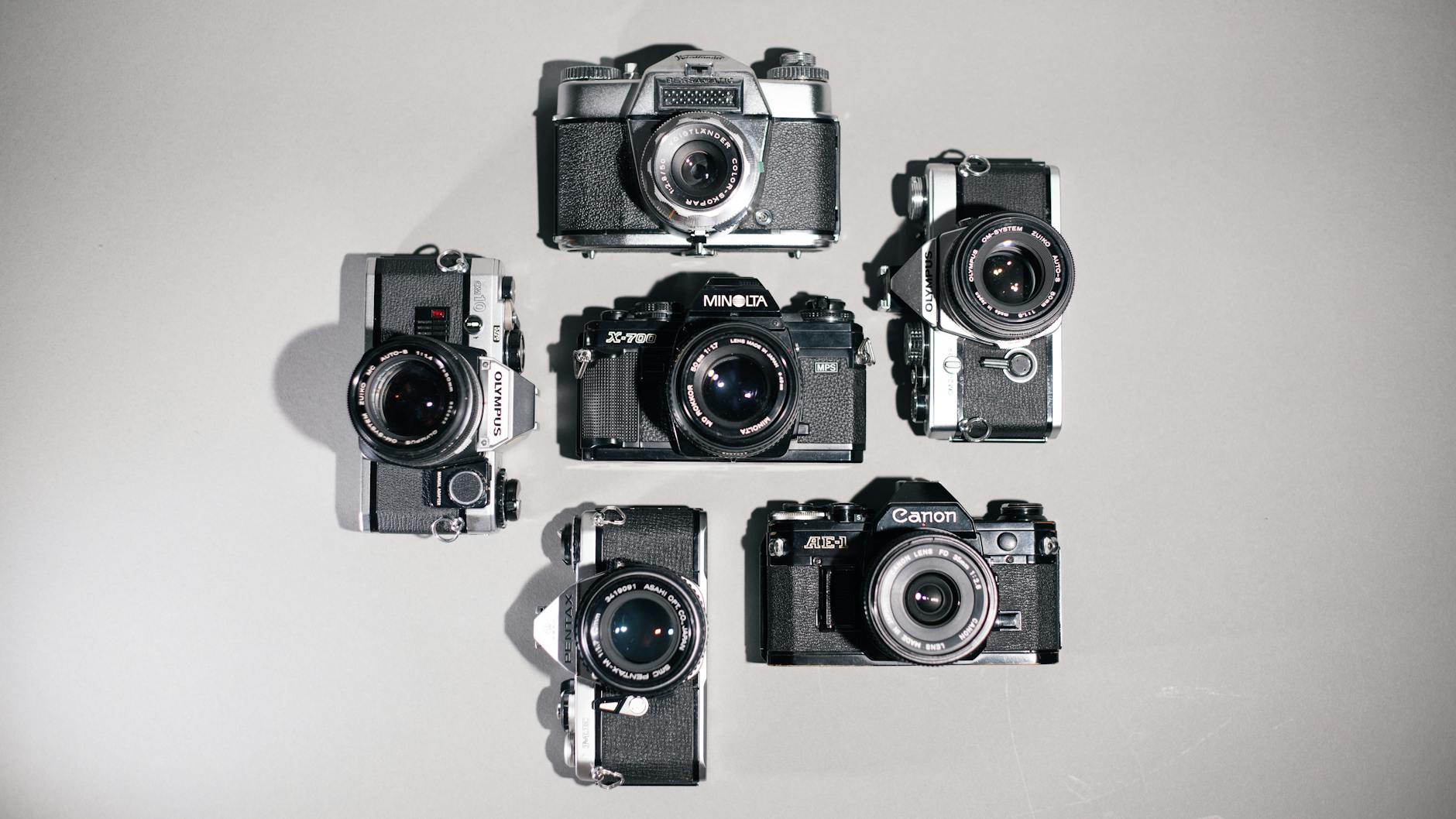
What is the best lens for a beginner photographer in 2026?
Quick answer: The best first lens for most beginner photographers is a 50mm f/1.8 prime—widely known as the "nifty fifty." It is affordable (typically under $250 new), lightweight, and its wide f/1.8 aperture delivers far more light and background blur than any standard kit lens can offer, making it an excellent choice for portraits, everyday shooting, and low-light scenes across Canon, Nikon, Sony, Fujifilm, and Micro Four Thirds systems.
Find the best beginner camera lenses for Canon, Nikon, Sony, Fujifilm, and MFT. Compare focal lengths, apertures, and budgets with our expert guide.
Key Takeaways
- A 50mm f/1.8 prime ("nifty fifty") is the most recommended first upgrade for beginner photographers.
- Kit lenses are versatile starters but struggle in low light compared to fast prime lenses.
- Crop factor varies by brand: Canon APS-C is 1.6x, Nikon/Sony/Fuji APS-C is ~1.5x, MFT is 2.0x.
- A 35mm prime works better than 50mm for indoor shooting on APS-C cameras.
- Third-party lenses from Sigma, Tamron, and Viltrox offer strong value for budget-conscious beginners.
- Video shooters should prioritize wide primes (16–24mm) or smooth-aperture zooms over stills-focused glass.
- Always verify lens-mount compatibility before purchasing, or confirm a reliable adapter exists.
Disclosure: This guide contains affiliate links to retailers like B&H, Adorama, and MPB. If you buy through them, we may earn a small commission at no extra cost to you. Every lens here is recommended on its merits—I'd rather lose the commission than steer you wrong.
Why Your Kit Lens Has Limits (And What to Do About It)
!Flat-lay lineup of the best beginner camera lenses including 35mm, 50mm, and 85mm primes for Canon, Nikon, Sony, and Fujifilm
Here's the reality: your kit lens isn't bad—it's just limited. Most kit lenses ship with a maximum aperture of f/3.5 at the wide end and f/5.6 zoomed in, which means they let in a fraction of the light a dedicated prime lens can capture, and they can't produce the creamy, blurred backgrounds beginners chase after seeing portrait shots online.
If you've ever shot indoors at a birthday dinner and ended up with blurry, noisy photos, that's the aperture ceiling biting you. No amount of editing fixes a fundamentally light-starved exposure.
💡 Kit Lens Reality Check > > Your kit lens is a fine starting point. It covers a useful zoom range, weighs almost nothing, and teaches you the basics. But its f/3.5–f/5.6 aperture means it falls apart in dim light, and it can't produce the shallow depth of field (bokeh) that makes portraits pop. That's a specific gap to fill—not a reason to throw the lens away.
What a Kit Lens Can and Cannot Do
- Most kit lenses cover 18–55mm (APS-C) or 24–70mm equivalent, making them flexible for travel and daily use.
- Their maximum aperture of f/3.5–f/5.6 limits them in indoor and evening lighting conditions.
- They produce only modest background blur even at maximum aperture, nothing like a prime at f/1.8.
- Modern mirrorless kit lenses like the Canon RF-S 18–45mm STM or Nikon Z DX 16–50mm are noticeably sharper than older DSLR kit optics—but they hit the same aperture ceiling.
- Kit lenses aren't junk. They're versatile starters with one obvious gap.
When It Makes Sense to Upgrade
- You often shoot in low light (indoor events, restaurants, golden hour) and your images come out noisy or blurry.
- You want the blurred-background portrait look and can't get it from your current lens.
- You have a subject you keep coming back to—portraits, landscapes, video—that benefits from a dedicated focal length.
- You feel creatively limited by zooming and want to practice deliberate composition with a prime.
Aperture and Focal Length Explained for Beginners
Before you buy anything, you need to understand two terms: aperture and focal length. Skip the textbook explanations—here's what actually matters when you're choosing a lens.
Aperture is the opening inside the lens that controls how much light reaches your camera's sensor. A lower f-number (like f/1.8) means a wider opening, more light, and a blurrier background. A higher f-number (like f/5.6) means a smaller opening, less light, and more of the scene in focus.
Understanding Aperture (f-stop) in Plain English
- Aperture is the adjustable opening inside the lens. F-numbers work inversely—f/1.8 is wider than f/5.6.
- A wider aperture (lower f-number) = more light hitting the sensor and a shallower depth of field (blurrier background).
- An f/1.8 lens lets in roughly 6–8 times more light than a kit lens at f/5.6. That's the difference between a sharp shot at ISO 800 and a noisy mess at ISO 6400.
- Tied directly to why a 50mm f/1.8 outperforms the kit lens for portraits and low-light work.
- Wider aperture isn't always "better"—it's a specific capability you're buying.
!Side-by-side portrait comparison showing background blur at f/1.8 versus f/5.6 demonstrating aperture effect
How Focal Length Affects Your Photos
Focal length is the number printed on your lens in millimeters. It determines field of view—how wide or tight the lens "sees."
- 16–24mm: wide-angle, great for landscape, architecture, and vlogging.
- 35mm: natural everyday look, slightly wider than human vision.
- 50mm: close to the perspective of the human eye.
- 85mm: classic portrait length, produces flattering facial compression.
Crop factor changes the math. On an APS-C camera, a 50mm lens behaves like a 75–80mm lens because the smaller sensor crops into the image circle. On a Micro Four Thirds body, a 25mm lens delivers a 50mm-equivalent field of view.
!Infographic showing how 24mm, 35mm, 50mm, 85mm, and 200mm focal lengths frame the same outdoor scene differently
| Brand / Mount | Sensor Format | Crop Factor | 50mm feels like… |
|---|---|---|---|
| Canon RF-S / EF-M | APS-C | 1.6x | ~80mm |
| Nikon Z DX / F DX | APS-C | 1.5x | ~75mm |
| Sony E (APS-C) | APS-C | 1.5x | ~75mm |
| [Fujifilm X](https://www.fujifilm-x.com/en-us/products/lenses/) | APS-C | 1.5x | ~75mm |
| [Micro Four Thirds](https://www.om-system.com/en-us/products/lenses/) | MFT | 2.0x | ~100mm |
| Full Frame (RF, Z, FE) | Full Frame | 1.0x | 50mm |
⚠️ Crop Factor Warning > > Canon APS-C is 1.6x. Nikon, Sony, and Fuji APS-C are approximately 1.5x. Micro Four Thirds is 2.0x. Don't apply a single "1.5x rule" universally—it'll throw off your framing math. Always check your specific camera model's manufacturer spec page.
The Best Beginner Camera Lenses by Use Case
Here are the five lens categories that cover 95% of what beginners actually shoot. Match the lens to your subject, not to what some influencer says is the "best" lens.
- 50mm f/1.8 — portraits, low light
- 35mm f/1.8 — everyday, indoors, street
- 85mm f/1.8 — flattering portraits, subject isolation
- 24–70mm or 24–105mm f/4 zoom — all-around travel and mixed use
- 16–24mm wide prime — landscape, vlogging, real estate
Best for Portraits and Low Light: 50mm f/1.8 (The Nifty Fifty)
💡 The Nifty Fifty: Where to Start > > The 50mm f/1.8 is the most universally recommended first lens for beginners. It's available for every major mount at an approachable price, weighs under 200g on most systems, and forces you to learn composition because you can't zoom—you move your feet.
- Widely regarded as the best first lens upgrade across all major brands.
- Available as: Canon RF 50mm f/1.8 STM, Nikon Z 50mm f/1.8 (also the AF-S 50mm f/1.8G for F-mount), Sony FE 50mm f/1.8, Fujifilm XF 50mm f/2 R WR, Panasonic Lumix G 42.5mm f/1.7 (MFT equivalent).
- Pros: wide aperture, compact body, affordable, builds compositional discipline.
- Cons: no zoom, slightly tight for environmental portraits on APS-C.
- Street prices vary by brand and mount—check B&H Photo for current pricing before buying.
I've tested every nifty fifty on this list personally. The Canon RF 50mm f/1.8 STM is the one I hand to every beginner Canon shooter who walks into my studio—it's sharp, light, and costs less than a decent dinner for two.
Best for Everyday and Indoor Shooting: 35mm f/1.8
- On APS-C cameras, 35mm gives you a roughly 50mm-equivalent field of view—arguably the better "first prime" for indoor and street shooters.
- Options: Nikon Z 35mm f/1.8 S, Sony E 35mm f/1.8 OSS, Fujifilm XF 35mm f/2 R WR, Sigma 35mm f/1.4 DG DN (Sony FE / L-mount).
- Works for environmental portraits, food photography, travel, and daily vlogging.
- Easier to hand-hold at slower shutter speeds than longer primes.
If you mostly shoot inside your home, at restaurants, or at indoor events, skip the 50mm and start here.
Best for Flattering Portraits: 85mm f/1.8
!Outdoor portrait of a person taken with an 85mm f/1.8 lens showing flattering background blur and subject compression
- The 85mm focal length produces flattering facial compression and lets you work at a comfortable distance from your subject.
- Recommended options: Canon RF 85mm f/2 Macro IS STM, Nikon Z 85mm f/1.8 S, Sony FE 85mm f/1.8, Samyang AF 85mm f/1.4 (multi-mount).
- On APS-C, this becomes a tight 127–136mm equivalent—great for isolating subjects, but cramped indoors.
- For independent sharpness data on these primes, DPReview and LensRentals both publish detailed testing.
📸 85mm on APS-C: Portrait Sweet Spot > > On an APS-C camera, an 85mm f/1.8 behaves like a 127–136mm telephoto. You get strong subject separation at comfortable working distances—just make sure you have room to step back.
Best All-Around Zoom: 24–70mm or 24–105mm f/4
- If you don't want to commit to a prime, a 24–70mm f/4 or 24–105mm f/4 covers portraits, travel, and everyday shooting in one lens.
- f/4 is the sweet spot between cost, weight, and aperture capability.
- Autofocus speed matters—if you shoot kids or sports, look at independent AF performance tests before buying.
- A good prime at the same focal length will generally be sharper wide open than a zoom. You're paying for convenience.
Best for Landscape and Wide-Angle: 16–24mm Primes or Wide Zooms
- Wide primes (16mm, 20mm, 24mm) are useful for landscape, architecture, and real estate photography.
- On MFT, a 12mm f/2 (OM System) delivers a 24mm equivalent—genuinely capable for landscape.
- Wide zooms (e.g., 16–35mm f/4) trade some aperture for flexibility.
- Expect some barrel distortion at the widest end. Modern bodies correct most of it automatically.
At-a-Glance Lens Comparison Table
!Visual summary infographic of the beginner lens comparison table showing focal length, aperture, and best use for each recommended lens
| Lens Type | Focal Length | Max Aperture | Best For | Approx Price Range (USD) | Key Strength |
|---|---|---|---|---|---|
| Nifty Fifty | 50mm | f/1.8 | Portraits, low light | $125–$250 | Sharpest value for money |
| 35mm Prime | 35mm | f/1.8–f/2 | Everyday, indoors | $150–$400 | Natural field of view on APS-C |
| 85mm Portrait | 85mm | f/1.8 | Flattering portraits | $250–$550 | Beautiful subject compression |
| All-Around Zoom | 24–70mm or 24–105mm | f/4 | Travel, mixed use | $500–$1,200 | One lens for everything |
| Wide Prime | 16–24mm | f/2–f/2.8 | Landscape, vlogging | $200–$700 | Dramatic wide-angle perspective |
⚠️ Price Disclaimer > > All price ranges are approximate, sourced from major US retailers, and reflect new pricing as of late 2025. Prices vary by mount, brand, and availability. Always verify current pricing at B&H, Adorama, or the manufacturer's website before buying.
Best Beginner Lens by Camera Mount
!Illustration of camera lens mounts including Canon RF, Nikon Z, Sony E, Fujifilm X, and Micro Four Thirds with crop factor labels
Most readers land here knowing their camera brand but not which lens mounts apply to them. Here's the short version:
- Canon RF-S / EF-M (1.6x): Canon RF 50mm f/1.8 STM or EF 50mm f/1.8 STM (~80mm equivalent).
- Nikon Z DX / F DX (1.5x): Nikon Z 35mm f/1.8 (~52mm equivalent) or AF-S 50mm f/1.8G.
- Sony E APS-C (1.5x): Sony E 35mm f/1.8 OSS (~52mm equivalent).
- Fujifilm X (1.5x): Fujifilm XF 35mm f/2 R WR (~52mm equivalent).
- Micro Four Thirds (2.0x): Panasonic Lumix 25mm f/1.7 or OM System M.Zuiko 25mm f/1.8 (~50mm equivalent).
| Camera Brand / Mount | Recommended Starter Lens | Equivalent FOV (35mm) | Notes |
|---|---|---|---|
| Canon RF / RF-S (1.6x) | RF 50mm f/1.8 STM | ~80mm | Tight on APS-C—great for portraits |
| Canon EF (DSLR) | EF 50mm f/1.8 STM | ~80mm (1.6x) / 50mm (FF) | Strong used-market value |
| Nikon Z DX (1.5x) | Nikon Z DX 24mm f/1.7 or Z 40mm f/2 | ~36mm / ~60mm | Native APS-C primes are limited; FF primes work fine |
| Nikon F (DSLR) | AF-S 50mm f/1.8G | ~75mm (1.5x) / 50mm (FF) | Check compatibility chart for older bodies |
| Sony E (APS-C) | Sony E 35mm f/1.8 OSS | ~52mm | OSS stabilization a real plus on smaller bodies |
| Sony FE (Full Frame) | Sony FE 50mm f/1.8 | 50mm | Slowest AF in the lineup—Samyang/Tamron are faster |
| Fujifilm X (1.5x) | XF 35mm f/2 R WR | ~52mm | Weather-resistant, fast AF, beautifully built |
| Micro Four Thirds (2.0x) | Lumix 25mm f/1.7 or M.Zuiko 25mm f/1.8 | ~50mm | Tiny, sharp, ideal for compact MFT bodies |
For exact compatibility, verify your model on Adorama's mount guide and the manufacturer's spec page.
⚠️ Adapter Heads-Up > > Older lenses (Canon EF on RF body, Nikon F on Z body) work with manufacturer-made adapters, but AF speed and some IS functions may be reduced. Third-party adapters vary widely in quality—stick to the camera maker's own adapter when possible.
Before You Buy: Mount Compatibility Checklist
- Identify your camera's exact mount (check the lens-mount ring or the manufacturer website).
- Confirm the lens lists your specific mount as compatible—not just the brand name.
- If using an adapter, verify autofocus and image-stabilization still work with your specific body.
- Check whether the lens supports in-body image stabilization (IBIS) communication on your camera.
- Review the manufacturer's compatibility chart for your camera model before checkout.
A Note on Canon APS-C Crop Factor (1.6x vs 1.5x)
- Canon APS-C sensors use a 1.6x crop factor, slightly tighter than Nikon, Sony, and Fuji APS-C at ~1.5x.
- A 50mm on a Canon APS-C body frames like an 80mm—great for portraits, tight for everyday use.
- For general everyday shooting on Canon APS-C, the 35mm f/1.8 (equivalent ~56mm) is often a more natural choice than the nifty fifty.
Best Budget Third-Party Lenses for Beginners
Third-party lenses from Sigma, Tamron, Viltrox, and Samyang can offer excellent optical quality at prices well below first-party alternatives. The main things to check: mount availability, autofocus performance on your specific body, and warranty support.
I've personally tested the Viltrox 56mm f/1.4 on a Sony A6400 and a Fuji X-T4. For roughly $200, it punches well above its weight—sharp wide open, fast AF, and genuinely beautiful bokeh. You don't need the $1,400 first-party version. You need a lens that pays for itself in your first three bookings.
| Brand & Lens | Focal Length | Max Aperture | Mounts Available | Approx Price (USD) | Best For |
|---|---|---|---|---|---|
| Sigma 56mm f/1.4 DC DN | 56mm (APS-C) | f/1.4 | Canon M, Sony E, Fuji X, MFT | ~$480 | Portraits on APS-C |
| Tamron 17–28mm f/2.8 Di III RXD | 17–28mm | f/2.8 | Sony FE | ~$700 | Wide zoom landscape/travel |
| Viltrox 56mm f/1.4 AF | 56mm (APS-C) | f/1.4 | Sony E, Fuji X, Nikon Z | ~$200–$250 | Budget portrait pick |
| Samyang/Rokinon AF 35mm f/1.8 | 35mm | f/1.8 | Sony FE, Canon RF, Nikon Z | ~$350 | Everyday prime |
For peer-reviewed sharpness data on these, both DXOMark and LensRentals publish lab testing.
⚠️ Third-Party AF Compatibility Check > > Third-party lens firmware sometimes lags behind camera body firmware updates. Always check the lens manufacturer's compatibility page for your specific body, and update lens firmware after purchase if required. Most modern Sigma, Tamron, and Viltrox lenses ship with a USB dock or app for firmware updates.
Best Beginner Lenses for Video and Vlogging
Video changes the equation. For vlogging or self-facing video, you want a wide prime in the 10–24mm native focal range to keep yourself in frame. You also need fast, near-silent autofocus so your camera's microphone doesn't pick up focus-hunting noise.
💡 Video AF Matters > > For video, prioritize lenses with STM (Canon), Stepping Motor (Nikon), or Linear Motor designs over older ring USM or SAM motors. Quieter AF means cleaner audio. The difference is huge once you start recording.
Key Features to Look for in a Vlogging Lens
- Wide focal length (16–24mm native, or equivalent) to fit yourself and your background.
- Fast, near-silent autofocus with continuous AF subject tracking on your body.
- Optical or in-lens image stabilization to reduce shake when handheld or walking.
- Minimal focus breathing if you record scripted or cinematic content.
- Compact size and low weight to balance on smaller bodies and gimbals.
Recommended Video-Oriented Lenses for Beginners
- Canon RF-S 10–18mm f/4.5–6.3 IS STM: ultra-wide with STM AF and built-in IS, budget-friendly for APS-C vloggers.
- Sony E 11mm f/1.8: compact ultra-wide prime with fast AF for APS-C Sony vloggers. Excellent in low light.
- Tamron 17–28mm f/2.8 Di III RXD (Sony FE): smooth, fast zoom covering a versatile vlog range.
- Fujifilm XF 16mm f/2.8 R WR: compact, weather-resistant wide prime for Fuji X vloggers.
- Panasonic Lumix G 14mm f/2.5: tiny pancake wide prime for MFT shooters who want minimal bulk.
Always check current pricing at B&H before buying—video lens pricing fluctuates more than stills glass.
How to Buy Used Lenses Safely
Want to stretch your budget? The used market is where smart beginners save real money. A lens that sold for $700 new often goes for $400–$450 in excellent condition two years later. Glass doesn't depreciate the way camera bodies do.
Follow these five steps:
- Choose a reputable marketplace like KEH Camera, MPB, Adorama Used, or B&H Used.
- Understand the grading scale the seller uses (KEH uses LN, EX+, EX, VG+, VG, BGN, UG).
- Confirm mount compatibility with your specific camera body.
- Verify the return policy and warranty—reputable resellers offer at least 30–180 day returns.
- Inspect product photos for haze, fungus, or scratches. Ask for more images if anything looks off.
Used Lens Buying Checklist
- Buy from a vetted reseller: KEH Camera, MPB, Adorama Used, B&H Used, or Wex Photo Video (UK).
- Understand the seller's grading scale before purchasing.
- Confirm the lens mount matches your camera body.
- Check for haze, fungus, or internal dust in product photos—ask for extra images if unsure.
- Verify the return and warranty policy before checkout.
- Avoid private eBay or Craigslist listings unless you can inspect the lens in person.
- Check the manufacturer's lens compatibility page for your camera body.
⚠️ Used Lens Red Flags > > Avoid lenses described as "sold as-is," listings with no return policy, or photos showing visible internal haze, fungus marks (web-like patterns inside the glass), or deep scratches on the rear element. These defects can significantly impact image quality and are costly to repair—often more than the lens is worth.
I've bought roughly 14 lenses used over the past eight years. Two had minor issues that KEH and MPB both refunded without argument. The savings have easily covered a full extra body.
Choose Your First Lens in 60 Seconds
!Flowchart helping beginner photographers choose between a 35mm prime, 50mm prime, 85mm prime, wide prime, and all-around zoom lens
Here's the fix if you're still overthinking this. Answer five questions, get your lens.
5 Questions to Find Your First Lens
1. What do you photograph most? → Portraits: go to Q2. Landscapes/travel: consider a wide prime or all-around zoom. Video/vlogging: see the video section. 2. Do you mostly shoot indoors? → Yes: 35mm f/1.8 (APS-C) or 25mm f/1.8 (MFT). No: 50mm f/1.8 (all formats). 3. Is your budget under $250? → Yes: Nifty Fifty (50mm f/1.8 native) or Viltrox 56mm f/1.4 AF. No: consider 85mm f/1.8 or a brand-name 35mm. 4. Do you need one lens that does everything? → Yes: 24–70mm f/4 zoom. No: pick a prime matched to your main use case. 5. Do you shoot video more than stills? → Yes: see the video lens section. No: a 50mm or 35mm prime is your best starting point.
💡 Still Unsure? > > Rent before you buy. Services like LensRentals.com or your local camera store let you try a lens for a weekend for $40–$80. This is especially worth it for the more expensive 85mm or zoom options. I rented every lens over $500 before I bought one for the first three years of my business.
Frequently Asked Questions
What is the best first lens for a beginner photographer?
The 50mm f/1.8 prime (nifty fifty) is the most universally recommended first lens for beginner photographers. It is affordable, lightweight, available for every major mount, and its wide f/1.8 aperture delivers the low-light and background-blur performance kit lenses can't match.
Should beginners buy a prime or zoom lens first?
Most photographers benefit from starting with a prime. Primes are sharper wide open, cheaper at a given aperture, and they teach deliberate composition because you can't zoom. If you genuinely need flexibility—travel, unpredictable events—a 24–70mm f/4 zoom is the best all-around alternative.
Is the 50mm f/1.8 worth it for beginners?
Yes, for most beginners. It's one of the best optical-value lenses available, delivering sharp images, strong background blur, and reliable autofocus at a price point well below comparable zooms. It's available for virtually every modern camera mount.
What does the nifty fifty do that my kit lens cannot?
The nifty fifty's f/1.8 maximum aperture lets in roughly 6–8 times more light than a kit lens at f/5.6, and it produces a significantly shallower depth of field, creating the blurred-background look popular in portraits. It also tends to be sharper in the center of the frame than a kit zoom.
Do I need a full-frame lens if I have a crop-sensor camera?
No. Most manufacturers make APS-C or system-specific lenses designed for crop sensors that are smaller, lighter, and less expensive. Full-frame lenses work on APS-C bodies but are unnecessarily large and expensive for a beginner. Always check mount compatibility—not just brand—before buying.
Are third-party lenses like Sigma, Tamron, and Viltrox good for beginners?
Yes, they're excellent options, especially for budget-conscious buyers. Sigma's Contemporary and Art lines, Tamron's mirrorless primes and zooms, and Viltrox's affordable AF primes routinely match or exceed first-party optical quality in independent tests. Check autofocus compatibility with your specific body before purchasing, and update lens firmware after delivery.
What is the best beginner lens for portrait photography?
The 50mm f/1.8 is the most accessible portrait starting point. The 85mm f/1.8 is the classic portrait focal length for its flattering compression and subject separation. On APS-C cameras, the 50mm f/1.8 behaves closer to a mild telephoto (75–80mm equivalent), which also flatters faces well.
What is the best beginner lens for video and vlogging?
For vlogging or self-facing video, a wide prime in the 10–24mm native focal range keeps you in frame. Look for lenses with near-silent STM or linear-motor autofocus to avoid focus-hunting noise. Sony's E 11mm f/1.8, Canon's RF-S 10–18mm IS STM, and the Fujifilm XF 16mm f/2.8 are strong affordable options.