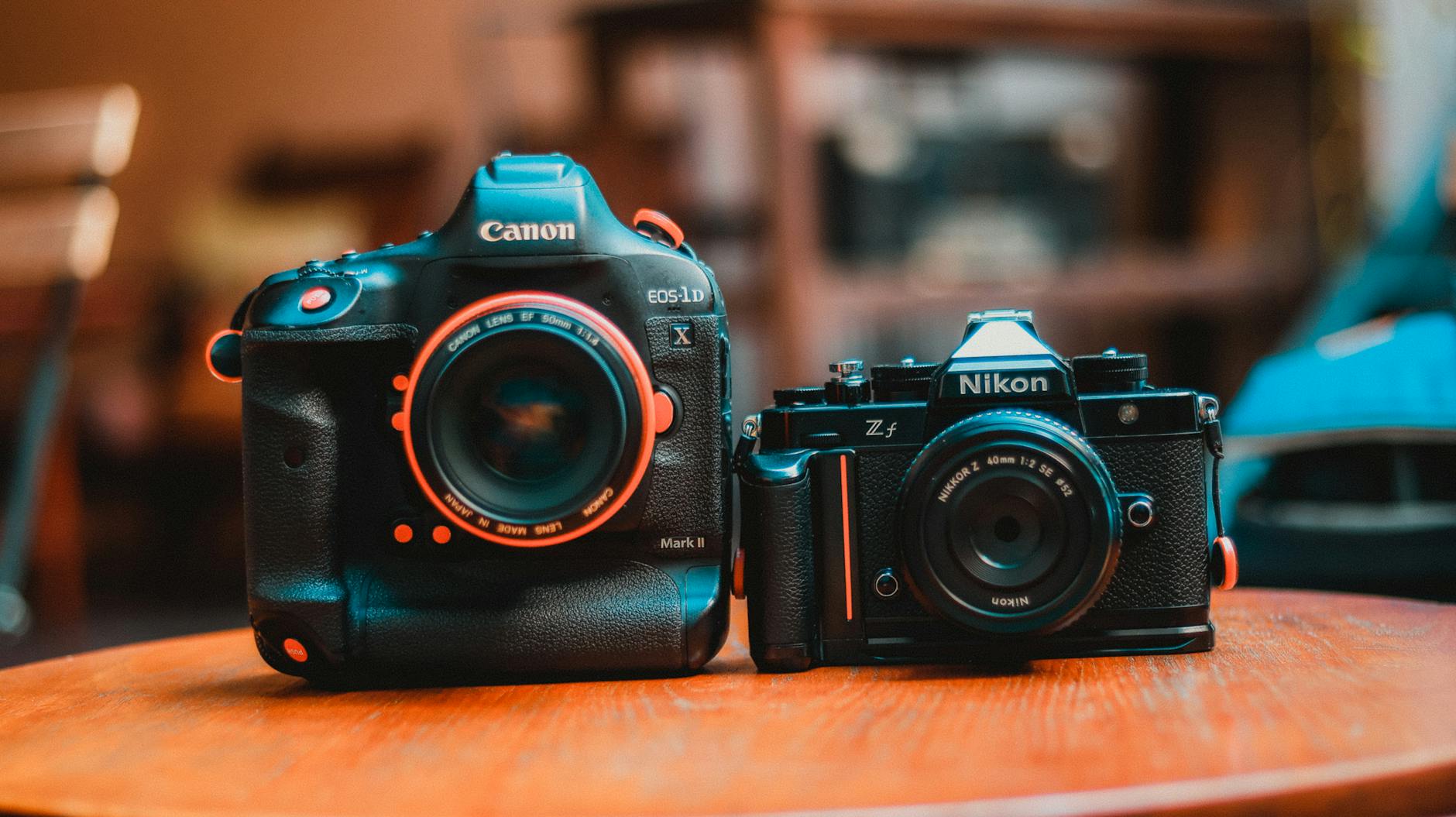
Which is better for your photography in 2026 — a DSLR or a mirrorless camera?
Quick answer: For most photographers buying a new interchangeable-lens camera in 2026, mirrorless is the better long-term investment: manufacturers have concentrated their R&D on mirrorless systems, and current mid-range mirrorless bodies offer superior autofocus coverage, real-time exposure preview, and advanced video features compared with equivalent DSLRs. That said, DSLRs remain excellent tools — they deliver an optical viewfinder with zero lag, longer battery life per charge, and outstanding value on the used market, making them a smart choice for budget-conscious buyers or photographers who prefer the traditional handling experience.
DSLR or mirrorless? Compare autofocus, image quality, video, battery life, and cost across Canon, Nikon, Sony, and Fujifilm — with a clear buying guide for every budget.
Key Takeaways
- Mirrorless removes the mirror box, enabling smaller bodies and full-sensor autofocus coverage.
- Current-generation mid- and high-end mirrorless AF generally outperforms DSLRs for subject and eye tracking.
- DSLRs typically deliver more shots per charge; mirrorless users should carry spare batteries.
- All major manufacturers are prioritising mirrorless R&D; DSLR lens roadmaps are largely mature.
- Used DSLR kits offer exceptional value for beginners on tight budgets.
- Existing DSLR lenses can usually be adapted to mirrorless bodies, though some limitations apply.
- The right choice depends on your subjects, budget, and whether you value future-proofing or immediate cost savings.
How DSLR and Mirrorless Cameras Actually Work
!A full-frame DSLR and an equivalent mirrorless camera body placed side by side on a neutral background showing the size difference
Here's the reality: a DSLR uses a physical mirror inside the camera body to bounce light from the lens up into an optical viewfinder, so you see the scene through the lens itself. A mirrorless camera removes that mirror entirely and feeds the image sensor's live signal directly to an electronic viewfinder (EVF) or rear screen. That single mechanical decision — mirror or no mirror — drives almost every practical difference you'll read about below.
Quick Definition: DSLR stands for Digital Single-Lens Reflex. The "reflex" refers to the mirror. Mirrorless cameras drop the mirror entirely, which is where most of the downstream differences originate.
Both systems capture light on a digital image sensor. Both can produce stunning images. The mirror is just the engineering choice that shapes everything else: viewfinder type, autofocus design, body size, battery drain, and video capability.
!Cross-section diagram showing the internal optical path of a DSLR with mirror box and pentaprism on the left versus a mirrorless camera with direct sensor path on the right
Inside a DSLR: The Mirror and Optical Viewfinder
When you look through a DSLR's viewfinder, here's what's happening: light enters the lens, hits a 45-degree mirror, bounces up into a pentaprism (or pentamirror on cheaper bodies), and exits through the optical viewfinder into your eye. You're seeing the scene optically, through glass — no electronics involved.
The moment you press the shutter, the mirror flips up out of the light path, the shutter opens, and light hits the sensor. That mirror movement is the familiar thwack of a DSLR — and it's also a source of micro-vibration that can soften long-lens shots at slower shutter speeds.
A separate phase-detection autofocus sensor sits beneath the main mirror, fed by a partially-transparent section of the mirror itself. This dedicated AF sensor is fast and accurate, but it only covers the central portion of the frame — typically somewhere between 15% and 50% of the total frame area depending on the body. As DPReview explains, this is a fundamental limitation of the reflex design.
There's one important wrinkle: when you switch a DSLR to live view or video mode, the mirror lifts and stays up. The dedicated AF sensor is now blind, so most DSLRs fall back to slower contrast-detection AF using the main image sensor. This is why DSLR video AF feels sluggish compared to mirrorless.
Inside a Mirrorless: Sensor-First Design
Pull the mirror out and the sensor becomes the camera's primary eye at all times. Light hits the sensor continuously, the camera processes that signal, and it sends a live feed to either the rear LCD or the electronic viewfinder.
That live feed unlocks a few things. On-sensor phase-detection AF (PDAF) — autofocus points built directly into the imaging sensor — can cover virtually the entire frame, not just a central cluster. AI subject detection can analyse the live image continuously to find eyes, faces, animals, birds, vehicles, and aircraft. And the EVF shows you exactly what the sensor sees, including a real-time preview of your exposure, white balance, and depth of field.
Removing the mirror box also shortens the distance from the lens mount to the sensor (the "flange distance"). Shorter flange distance means lens designers can place optical elements closer to the sensor, which generally allows for better corner sharpness and faster wide-aperture lenses. It also means wider mount diameters — Canon's RF, Nikon's Z, and Sony's E mounts all benefit from this.
The honest trade-off: EVFs have a tiny amount of lag and consume battery continuously. Modern EVFs on cameras like the Sony Alpha series have closed the gap significantly, but the optical viewfinder still wins on pure responsiveness.
Side-by-Side Spec Comparison: Typical DSLR vs Mirrorless
Let's break down the actual numbers. The table below uses typical ranges for current-generation bodies — your specific model may fall outside these ranges, so always verify against manufacturer spec sheets.
| Feature | Typical DSLR | Typical Mirrorless |
|---|---|---|
| Viewfinder Type | Optical, ~100% coverage on enthusiast/pro bodies | Electronic, typically 0.5–0.8" OLED |
| AF Frame Coverage | Central cluster, ~15–50% of frame | Full-sensor PDAF, up to ~100% of frame |
| Burst Rate | ~6–12 fps (mechanical shutter) | ~12–40+ fps (electronic shutter) |
| Full-Frame Body Weight | ~700–900 g with battery | ~450–750 g with battery |
| Battery Life (CIPA) | ~600–1,500 shots per charge | ~300–700 shots per charge |
| Video AF System | Contrast-detect in live view on most | On-sensor PDAF with subject tracking |
| Body Depth | Deeper (mirror box required) | Shallower (no mirror box) |
| Native Lens Ecosystem | Mature; thousands of options | Actively expanding; adapters available |
| New Body Entry Price | Limited new options; strong used market | Wide new range across all tiers |
!Infographic comparing typical DSLR versus mirrorless specifications including viewfinder type, autofocus coverage, burst rate, battery life, and weight
⚠️ Important: All spec ranges in this table reflect typical current-generation bodies and will vary by model, firmware version, and shooting conditions. Always verify specs on the manufacturer's official product page before purchasing. CIPA battery ratings in particular are a standardised test result — real-world battery life depends heavily on how often you use the EVF versus the rear screen, burst shooting, and connectivity features like Bluetooth and Wi-Fi.
Feature-by-Feature Breakdown: What Actually Matters in Real Shooting
💡 The Short Version: Choose mirrorless if you want full-frame AF coverage, advanced video, or a future-proof system. Choose a DSLR if you want an optical viewfinder, longer battery life, or the best value on the used market.
This is where the spec sheet meets actual shooting. I've used both systems professionally for years, and the differences below are the ones that actually change how you work.
Autofocus: Coverage, Speed, and Subject Detection
If there's one area where mirrorless has pulled decisively ahead, it's autofocus — and specifically, autofocus coverage and subject intelligence.
Most modern DSLRs use a dedicated phase-detection AF module with somewhere between 9 and 153 AF points, clustered in the centre of the frame. That central cluster is fast and accurate, but it leaves the edges and corners with no native phase-detect coverage. If your subject moves toward the edge of the frame, you either recompose or your AF system falls back to less reliable methods. Documented testing by Admiring Light puts typical DSLR AF coverage at roughly 15–50% of frame area depending on the body.
!Diagram comparing the autofocus point coverage area of a typical DSLR showing a small central cluster versus a mirrorless showing near-full sensor coverage
Mirrorless cameras put phase-detect AF pixels directly on the sensor, which means coverage extends to nearly the entire frame on most current bodies. Pair that with AI subject detection — eye AF for humans, animals, and birds; vehicle detection for cars, motorcycles, and aircraft — and you have an autofocus system that can identify and track a subject from corner to corner while you concentrate on composition.
A big separate BUT: not every mirrorless camera beats every DSLR at autofocus. An older or entry-level mirrorless body may still struggle in low-light, low-contrast conditions where a high-end DSLR's dedicated AF module performs admirably. Generation and tier matter more than mirror-versus-mirrorless alone.
The takeaway for moving subjects — sports, wildlife, kids, pets — is straightforward: a current mid-range or better mirrorless body will give you a meaningfully better hit rate, especially when your subject isn't centred in the frame.
Viewfinder: Optical vs Electronic
This is the most personal part of the comparison. I've watched experienced DSLR shooters pick up a mirrorless body and immediately dislike the EVF, then come back six weeks later wondering how they ever shot without exposure preview.
The optical viewfinder (OVF) shows you the scene through the lens, optically. Zero lag. No battery drain to display the image. It performs identically in any lighting because there's no electronics involved in showing you the scene.
The electronic viewfinder (EVF) shows you exactly what the sensor sees — including a real-time preview of your exposure, white balance, and depth of field. You can overlay a live histogram, focus peaking, zebras for overexposure, and a magnified focus check. What you see is what you get before you press the shutter.
Modern EVFs have closed the lag gap dramatically. Flagship bodies offer 0.005 second blackout times and refresh rates over 120 Hz. In dim indoor light or near-darkness, a quality EVF can actually show you more than an OVF because it amplifies the signal. In bright sunlight with a high-contrast scene, the best OVFs and EVFs are roughly comparable.
Most photographers who've spent decades behind an OVF report adapting to an EVF within a few weeks. The exposure preview alone is, for many shooters, worth the switch.
Image Quality: Sensor, Resolution, and Dynamic Range
Here's a myth worth killing: mirrorless cameras don't take "better pictures" than DSLRs just because they're mirrorless. Image quality is determined almost entirely by sensor size, sensor generation, processing engine, and the lens you put in front of it. A full-frame DSLR and a full-frame mirrorless with comparable sensors produce comparable raw files.
What has shifted is that newer mirrorless bodies tend to ship with more recent sensor technology — stacked CMOS designs, back-illuminated architectures, and faster readout speeds that reduce rolling shutter in video and electronic shutter modes. If you're comparing a 2024 mirrorless to a 2014 DSLR, the mirrorless will likely have cleaner high-ISO performance. But that's a sensor generation gap, not a mirror gap.
For studio, portrait, and landscape work where you're shooting from a tripod with controlled subjects, both systems deliver excellent results from full-frame and APS-C sensors. Pick the system whose handling and lens lineup fits your workflow.
Video: Where Mirrorless Pulls Ahead
If you shoot video at all, this section probably decides your choice for you.
DSLRs lift the mirror in video mode, which disables the dedicated phase-detect AF sensor. Most fall back to contrast-detect autofocus, which hunts visibly as it searches for focus — you've probably seen this exact "wobble" in older YouTube videos. Some later-generation DSLRs added hybrid AF in live view (Canon's Dual Pixel CMOS AF being the standout), but the category overall is video-handicapped.
Mirrorless cameras use the same on-sensor PDAF in video that they use for stills. The result: smooth, confident continuous autofocus that locks onto eyes and faces and follows them through the frame. For event shooters, vloggers, documentary work, and anyone running solo, this is a genuine workflow change.
Current mirrorless bodies commonly offer 4K at 30 or 60 fps, with flagships pushing into 6K and 8K. Log gamma profiles (Sony S-Log, Canon C-Log, Nikon N-Log) and professional codecs (ProRes, all-intra H.265) are widely available on mirrorless and rare on DSLRs.
If video is a primary use case, the choice is mirrorless across every major brand.
Size, Weight, and Ergonomics
Mirrorless bodies are generally smaller and lighter than equivalent DSLRs because there's no mirror box to accommodate. A typical full-frame mirrorless weighs 450–750 g with battery; an equivalent DSLR usually weighs 700–900 g.
A big caveat: this advantage shrinks once you attach lenses. Native mirrorless full-frame lenses are not dramatically smaller than DSLR equivalents — physics still dictates that a 70-200 f/2.8 is a 70-200 f/2.8. And pro mirrorless flagships like the Sony A1 II and Canon EOS R1 are nearly the size of comparable DSLRs when you factor in built-in grips.
Some photographers actively prefer the larger grip and front-heavy balance of a DSLR with a big telephoto. Ergonomics are personal. If you can, handle both systems in a store before committing.
For travel, hiking, street, and any scenario where pack weight matters, mirrorless wins. For studio, sports, and wildlife with heavy glass, the size difference matters less than you might expect.
Battery Life: A Real-World Consideration
This is the one area where DSLRs still hold a clear lead. The reason is simple physics: a DSLR only powers the sensor and processor at the moment of capture. The rest of the time, the optical viewfinder is just glass and you're sipping zero electricity to compose.
A mirrorless camera powers the sensor, the processor, and the EVF or LCD continuously. CIPA-rated battery life on mirrorless bodies typically lands between 300 and 700 shots per charge; equivalent DSLRs typically rate 600–1,500 shots.
Real-world numbers vary wildly. If you're a careful shooter using the EVF sparingly, you may double the CIPA rating. If you're shooting bursts, recording video, or leaving Bluetooth on for geotagging, you may halve it.
The practical answer: if you go mirrorless, budget for at least one spare battery as standard practice. Two or three if you shoot weddings, events, or long days. Modern mirrorless batteries like the Sony NP-FZ100 and Canon LP-E6NH have improved endurance substantially, but spares remain non-negotiable for paid work.
Lens Ecosystem and Adapter Compatibility
DSLR lens ecosystems are mature in the literal sense: Canon EF, Nikon F, and Pentax K have been in development for decades, with thousands of native options ranging from sub-$100 nifty fifties to specialist tilt-shifts and supertelephotos. The used market for DSLR glass is enormous and pricing is generally favourable.
Mirrorless native mounts — Canon RF, Nikon Z, Sony E, Fujifilm X, Micro Four Thirds — are newer and still expanding. Sony's E-mount is the most mature thanks to its head start, with the most extensive native mirrorless lineup. Canon RF and Nikon Z are growing fast but have gaps in specialist focal lengths. Fujifilm X covers APS-C thoroughly and has excellent native primes.
Adapter compatibility is the bridge for most switchers:
- Canon EF → RF: Canon's official EF-EOS R adapter maintains full autofocus and image stabilisation on most EF lenses.
- Nikon F → Z: The FTZ II adapter supports AF-S and AF-P lenses fully; older screw-drive AF-D lenses retain metering and aperture control but lose autofocus.
- Sony A → E: The LA-EA5 adapter brings A-mount lenses to E-mount Alpha bodies with broad compatibility.
If you already own a serious DSLR lens collection, this matters: you don't have to replace your glass on day one of switching to mirrorless. You buy the body, buy the adapter, and use what you have. New lens purchases gradually shift to native mount over time.
Brand-by-Brand Snapshot: Canon, Nikon, Sony, Fujifilm, and OM System
!Comparison chart showing the current DSLR and mirrorless system status for Canon, Nikon, Sony, Fujifilm, and OM System
Each brand has taken a different path into mirrorless. Here's the lay of the land in 2026.
| Brand | Current DSLR Line | Current Mirrorless System | Adapter for DSLR Lenses | System Status Note |
|---|---|---|---|---|
| Canon | EOS DSLR (EF mount, limited new development) | EOS R series (RF mount) | EF-EOS R adapter | Mirrorless is the primary development platform |
| Nikon | F-mount DSLR (limited new development) | Z series (Z mount) | FTZ II adapter | Mirrorless is the primary development platform |
| Sony | A-mount (legacy, limited new development) | Alpha (E mount) | LA-EA5 adapter | Fully mirrorless-focused for many years |
| Fujifilm | No DSLR history | X series (APS-C) and GFX (medium format) | — | Mirrorless-native brand |
| OM System (formerly Olympus) | No current DSLR | OM-1 series (Micro Four Thirds) | MMF-3 for legacy Four Thirds | Mirrorless-only |
| Pentax / Ricoh | Active DSLR line | Limited mirrorless | K-mount native | One of the few brands still developing new DSLRs |
💡 Already Own Lenses? If you have a collection of Canon EF, Nikon F, or Sony A-mount lenses, adapter compatibility is good news — you can migrate to mirrorless without immediately replacing your glass. Verify model-specific compatibility on each manufacturer's official adapter compatibility chart before buying.
A note before moving on: product lineups change. Verify the current bodies and lens roadmaps on each manufacturer's website (Canon, Nikon, Sony, Fujifilm) before making a purchase decision. New body announcements and discontinuations happen frequently.
Which Is Best for Your Shooting Style? Use-Case Recommendations
The right system depends on what you actually shoot. Here's how I'd guide each major use case:
| Shooting Style | Recommended System | Key Reason |
|---|---|---|
| Wildlife and sports | Mirrorless | Full-sensor AF tracking and high burst rates |
| Weddings and events | Mirrorless | Eye-detect AF and silent electronic shutter |
| Portraits and studio | Either | Image quality is sensor-dependent; both excel |
| Travel and street | Mirrorless | Smaller, lighter bodies |
| Video and content creation | Mirrorless | Superior video AF and codec options |
| Beginners on a budget | Used DSLR or entry mirrorless | Depends on budget — see cost section |
| Landscape and architecture | Either | Tripod-based shooting suits both systems |
A few additional notes per category:
Weddings and events: silent shutter is genuinely useful during ceremonies, vows, and speeches where mirror slap would be intrusive. Eye AF removes the need to focus-and-recompose during fast-moving receptions.
Portraits and studio: if you already own quality DSLR lenses, a high-resolution DSLR like a used Nikon D850 or Canon 5D Mark IV remains a phenomenal portrait tool. The fashion industry shot for years on DSLRs.
Travel and street: weight matters when you're walking 15,000 steps a day. APS-C mirrorless systems like Fujifilm X-T5 or Sony A6700 hit a sweet spot of capability and portability.
Beginners on a budget: a used DSLR kit under $600 with a kit zoom and a 50mm prime teaches you everything you need about exposure, composition, and focus. We'll dig into specific cost ranges next.
Cost and Total Budget Breakdown: New Mirrorless vs Used DSLR
Most photographers think the body price is the budget. It isn't. Lenses, batteries, cards, and a bag often equal or exceed the body cost. Let's break down realistic kit totals across three budget tiers.
| Budget Tier | Used DSLR Path (Body + 2 Lenses) | New Mirrorless Path (Body + 2 Lenses) |
|---|---|---|
| Entry | Used APS-C DSLR kit, ~$300–$600 | Entry mirrorless APS-C kit, ~$900–$1,500 |
| Mid-range | Used full-frame DSLR kit, ~$700–$1,500 | Mid mirrorless full-frame or APS-C kit, ~$2,000–$3,500 |
| Professional | Pro DSLR used kit, ~$1,500–$3,500 | Pro mirrorless kit, ~$4,000–$8,000+ |
Prices are estimated ranges based on publicly available used and new retail pricing as of 2026. Check MPB, KEH, B&H Photo, and direct manufacturer sites for current pricing in your region.
What to Include in Your Total Budget
- Camera body
- At least one versatile zoom lens and one prime or specialist lens
- Extra battery or batteries (especially for mirrorless — budget for two spares)
- Memory cards (check speed requirements; UHS-II SD or CFexpress for 4K+ video)
- Camera bag or strap
- Lens adapter if migrating existing glass to a new mirrorless mount
- Editing software (Lightroom, Capture One, or alternatives — subscription or perpetual licence)
- Cleaning kit (sensor swabs, blower, microfibre cloths)
📌 The Used DSLR Case: For a beginner with a budget under $600, a used APS-C DSLR from a reputable dealer like MPB, KEH, or B&H Used with a kit zoom and a fast 50mm prime is a legitimate, capable starting kit that teaches exposure fundamentals without the cost premium of new mirrorless. This is not a consolation prize — it's a practical, widely-used path into interchangeable-lens photography. I started two of my best second-shooters on used Canon 6D bodies for under $500 each and they produced wedding-quality work within months.
The used DSLR market also has a structural advantage: a $400 used DSLR will be a $300 used DSLR in three years, while a $1,200 new mirrorless body depreciates faster in absolute dollar terms. If you're learning and might upgrade in 18 months, used DSLR minimises the financial risk.
Future-Proofing: Lens Roadmaps and System Longevity
If you want to actually buy once and shoot for a decade, future-proofing matters. Here's the honest assessment.
⚠️ A Note on Manufacturer Statements: Claims that any specific brand has fully ceased DSLR development should be linked to an official announcement or reputable industry reporting. As of 2026, major manufacturers are concentrating new product development on mirrorless, but DSLR bodies remain available new and used. Verify any brand-specific discontinuation claims with the manufacturer's official communications before making purchase decisions.
Where Each Brand Is Investing in 2026
- Canon: Publicly committed to the EOS R system as its primary platform. The RF mount lens roadmap continues to expand across pro and consumer tiers. EF-mount DSLR bodies remain available new and used, but new EF camera announcements have effectively stopped. See Canon's EOS R system overview.
- Nikon: Actively developing the Z system as its flagship platform. The FTZ II adapter bridges F-mount glass to Z bodies. Nikon has communicated that mirrorless is its primary R&D focus.
- Sony: Has been mirrorless-only for interchangeable-lens development for many years. E-mount is mature and deep, with the broadest current native mirrorless lens lineup.
- Fujifilm: No DSLR history. Fully committed to X-mount APS-C and GFX medium format mirrorless. The X series roadmap continues to expand both bodies and lenses.
- OM System (formerly Olympus Cameras): Micro Four Thirds mirrorless only, with ongoing lens development and the OM-1 flagship line.
- Pentax / Ricoh: One of the few brands continuing meaningful DSLR development. Notable as an exception — verify current status with Pentax before purchase.
What This Means for Your Investment
Buying into a mirrorless system today means buying into the platform receiving active R&D, new lenses, firmware updates, and accessory development across every major brand except Pentax.
If you already own a DSLR system, you don't need to switch immediately. DSLR bodies will be serviceable for many years. Lenses retain value and will adapt to mirrorless bodies when you eventually upgrade. There is no urgent forcing function.
If you're buying your first interchangeable-lens system from scratch in 2026, mirrorless offers better long-term ecosystem support and is the more defensible long-term investment.
For a budget buyer, the mature used DSLR market is a feature, not a bug — you get proven, capable gear at significantly lower prices than equivalent new mirrorless.
Decision Guide: Should You Buy a DSLR or Mirrorless?
!Flowchart helping photographers decide between buying a DSLR or mirrorless camera based on budget, shooting style, and priorities
Here's the fix ↓ one step at a time. Work through the checklists below and the answer becomes obvious.
Choose Mirrorless If...
- You are buying a new system from scratch and want the best long-term investment
- You shoot moving subjects (sports, wildlife, pets, children) and need reliable tracking AF
- Video is part of your workflow
- You want the lightest possible kit for travel or street photography
- You are ready to invest in a growing lens ecosystem
Choose a DSLR If...
- Your budget is under approximately $600–$800 and a used DSLR kit offers more value
- You strongly prefer an optical viewfinder and the traditional handling feel
- You need the longest possible battery life without carrying spares
- You already own a large collection of DSLR lenses and are not ready to adapt
- You are buying for a child or student who needs a durable, learning-friendly body
💡 If You Already Own a DSLR: There is no urgency to switch. Your current DSLR continues to produce excellent images. Consider upgrading to mirrorless when your body needs replacement, when a specific mirrorless feature (eye AF, video quality, compact size) solves a real problem in your workflow, or when your budget supports it. A forced upgrade for its own sake is never necessary — I shot weddings on a Canon 5D Mark III well into the mirrorless era and clients never asked what system I used.
The five-step process to land your final decision:
- Identify your primary shooting style and subject matter. Be honest about what you actually shoot 80% of the time, not what you aspire to shoot.
- Set your total budget including body, two lenses, batteries, cards, and a bag.
- Check lens ecosystem compatibility and adapter options if you already own glass.
- Handle both an optical and electronic viewfinder camera in person if you possibly can — this single experience changes minds.
- Choose between a new mirrorless system or a used DSLR kit based on the priorities above.
Frequently Asked Questions
Is mirrorless really better than a DSLR?
For most photographers buying new in 2026, yes — current mid-range and above mirrorless cameras offer better autofocus coverage, more advanced video, and a future-proof ecosystem. DSLRs remain competitive for optical viewfinder preference, battery endurance, and used-market value. "Better" depends on your priorities, not the hardware alone.
Do mirrorless cameras take better pictures than DSLRs?
Not inherently. Image quality is primarily determined by sensor size and generation, not the presence or absence of a mirror. A full-frame mirrorless and a full-frame DSLR with comparable sensors will produce very similar raw image quality. Newer mirrorless sensors may have improved readout speeds and low-light performance, but that's a generation gap, not a mirror gap.
Can I use my DSLR lenses on a mirrorless camera?
In most cases, yes — with an adapter. Canon EF lenses work on EOS R bodies via Canon's official EF-EOS R adapter. Nikon F-mount lenses work on Z-series bodies via the FTZ II adapter. AF performance is generally retained on modern lenses, though some older screw-drive lenses have limitations. Always check manufacturer documentation for your specific lens and adapter combination before purchasing.
Why does a mirrorless camera have shorter battery life than a DSLR?
Because the sensor, image processor, and electronic viewfinder run continuously in a mirrorless camera, drawing power even while you compose. In a DSLR, the sensor only activates at the moment of capture and the optical viewfinder uses no power. Mirrorless battery life varies widely by model — carrying at least one spare battery is standard practice for any serious shooting.
Are DSLRs being discontinued?
Major manufacturers including Canon, Nikon, and Sony have shifted their primary R&D investment to mirrorless systems. DSLR bodies remain available new and on the used market, but new DSLR model releases have slowed significantly. Pentax/Ricoh is one notable exception, continuing active DSLR development. Verify the current lineup directly with each manufacturer before purchasing.
Which is better for video — DSLR or mirrorless?
Mirrorless is significantly better for video in most scenarios. Mirrorless cameras use full on-sensor phase-detection AF during recording, enabling smooth subject and eye tracking. Most DSLRs rely on slower contrast-detect AF in video mode with the mirror raised. Mirrorless bodies more commonly support 4K at higher frame rates, log gamma profiles, and professional codecs.
Is it worth upgrading from a DSLR to mirrorless?
It depends on your workflow. If you shoot fast-moving subjects, rely heavily on video, or want the latest AI subject-tracking autofocus, upgrading will deliver noticeable improvements. If your DSLR meets your current needs, there's no urgent reason to upgrade — your existing lenses will adapt to mirrorless when you're ready. Upgrade when your body needs replacement rather than switching for its own sake.
Which mirrorless system should a beginner choose?
For beginners, the most important factors are budget and existing lens ownership. Canon EOS R and Nikon Z entry-level bodies offer familiar interfaces for those coming from Canon or Nikon DSLRs. Sony's E-mount APS-C range is competitive with a strong used market. Fujifilm X-series is popular for its handling and colour science. Start with the brand whose entry-level body fits your budget and whose system you can grow into over the next five years.
Sources
- Mirrorless vs DSLR: Key Differences — DPReview
- DSLR vs Mirrorless Cameras — B&H Explora
- DSLR vs Mirrorless: Which Should You Buy? — PetaPixel
- Mirrorless vs DSLR — Sony Official
- Introducing the Nikon Z System — Nikon USA
- Canon EOS R System Overview — Canon USA
- Fujifilm X Series Stories & Technology — Fujifilm
- Used Camera Buying Guide — MPB
- Revisiting the DSLR — Is Mirrorless Really Better? — Admiring Light
- Imaging Resource